FOURTH QUARTER INSIGHTS – October 20, 2026
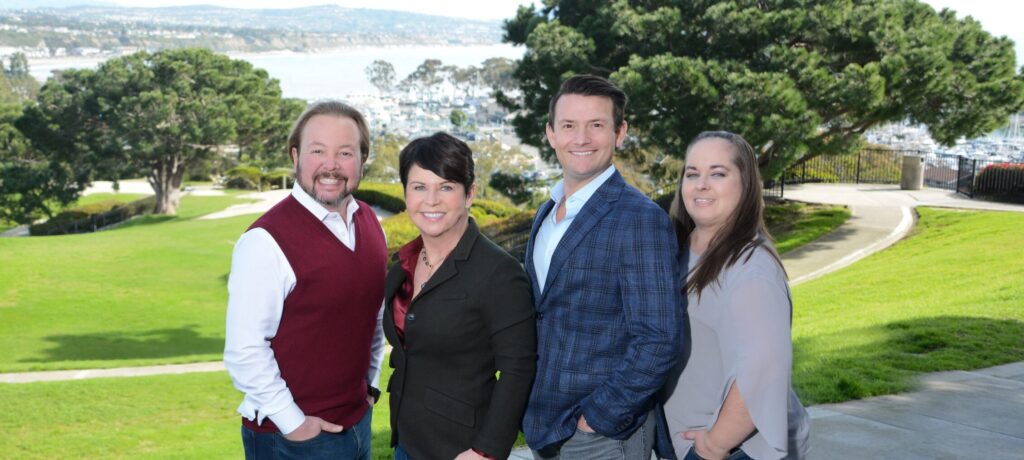
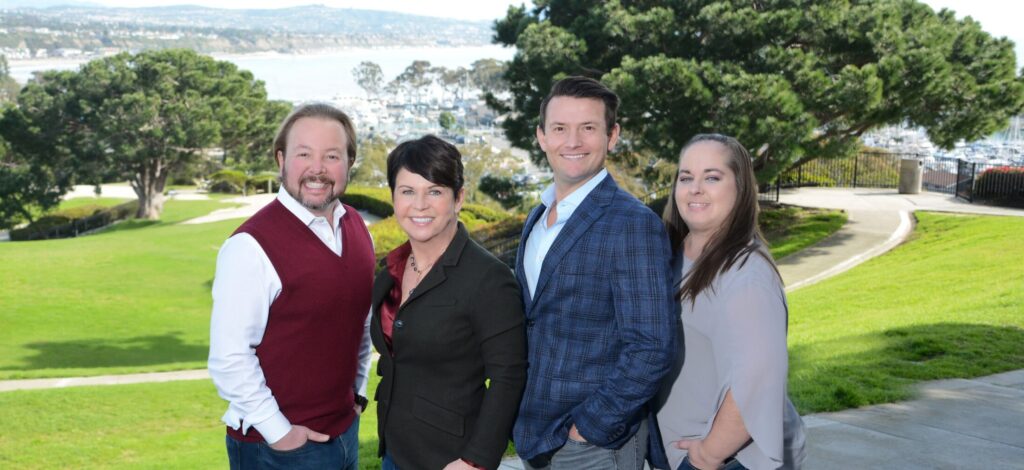
around the office
- Out in the community. In September, we joined the Natural History Museum of Los Angeles County and the Catalina Island Conservancy for their NHM Fellows & Leadership Circle evening, “Celebrating the Channel Islands.” It was a wonderful night, learning about the work being done to protect one of California’s most remarkable natural treasures, just off our own coastline.
- Supporting The Shea Center. Leslie and Fred attended The Shea Center’s sold-out Annual BBQ & Family Faire in San Juan Capistrano. The J.F. Shea Therapeutic Riding Center is a local nonprofit that enhances the lives of individuals with disabilities through therapeutic horse-related programs. The evening brought supporters together for a BBQ dinner, family activities, and inspiring rider demonstrations and stories, all in support of the center’s work.
- A new addition. Matt and his family welcomed Gummy, a fluffy orange kitten, into their home this fall. He has already claimed the couch and everyone’s hearts.


economic & market outlook
You can’t fix an oil shortage with interest rates
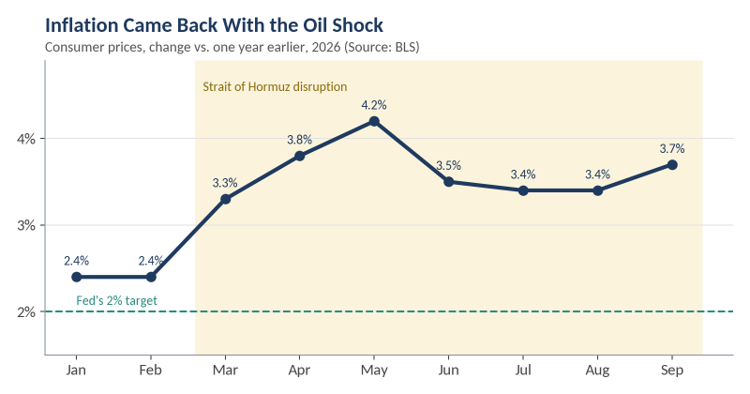
2026 has been the year the script flipped. A war-driven disruption in the Strait of Hormuz — which carried about one-fifth of the world’s oil — sent energy prices soaring and pushed inflation back up. In response, the Federal Reserve reversed course and raised interest rates in September, and many economists expect more increases by year-end. We think that’s the wrong medicine.


The Problem Is a Shortage of Oil, Not Too Much Spending
Inflation was running at a comfortable 2.4% in January. It climbed in lockstep with oil once the Strait was disrupted, reaching 3.7% in September — when gasoline prices alone jumped 7.1% in a single month. Strip out food and energy, and prices rose a much tamer 2.6% over the past year.
Why Raising Rates Is the Wrong Tool
- Rates work on demand, not supply. Higher rates cool inflation by making borrowing expensive so people and businesses spend less. That works when too much money is chasing too few goods. It does nothing when the issue is that the goods — in this case oil — physically can’t get to market.
- The oil shock is already doing the Fed’s job. High gas prices act like a tax on every household. With paychecks up 3.0% and prices up 3.7%, families are already cutting back. Hiking on top of that squeezes the same consumers twice.
- The job market is already cooling. Employers added just 29,000 jobs in September, the prior two months were revised down by 60,000, and wage growth is the slowest since 2021. That is not an overheating economy.
- Financial conditions are already tight. The 10-year Treasury yield recently peaked at 5.31%, its highest level since 2002, and 30-year mortgages are above 7%. Housing and small businesses feel that immediately; the Strait of Hormuz does not.
- History has a warning. In July 2008, with oil near record highs, the European Central Bank raised rates to fight energy-driven inflation — and was cutting again within months as the economy weakened. Tightening into a supply shock has a poor track record.

What this chart says: After three cuts in late 2025, the Fed raised rates again in September — moving against an economy that is already slowing.
The other side — and why we still disagree
The Fed worries people will come to expect high inflation, and consumers’ one-year outlook just hit 3.9%, the highest since 2023. But longer-term expectations remain anchored, a sign people see this as an energy spike. When oil briefly normalized in June, Brent fell to around $70; a lasting reopening should bring inflation down on its own.
Looking Ahead: A New Fed, and a Better Setup for Real Estate
Relief may come from the Fed itself. Kevin Warsh became Fed chair in May, and 2027 is his first full year leading the committee. In January, the four regional Fed presidents who vote on rates rotate out — this year’s group was widely viewed as leaning toward tighter policy — and Chicago, Richmond, Atlanta, and San Francisco rotate in. The vice chair’s term also ends in September 2027, giving the President another key appointment. Several major forecasters expect cuts to begin in 2027 as the oil shock fades.
Real estate stands to benefit. Housing has been frozen by high mortgage rates and homeowners unwilling to give up their low-rate loans. As rates fall, that pent-up demand should start to unlock, and lower borrowing costs tend to support property values and real estate investments. One caution: mortgage rates follow long-term bond yields more than the Fed’s short-term rate, so the full benefit depends on inflation and long-term yields cooperating too.

Important Disclosures: This commentary is provided by Optivest, Inc., a registered investment adviser, for informational purposes only and does not constitute investment, tax, or legal advice or a recommendation to buy or sell any security. Data are as of October 16, 2026 unless otherwise noted and come from sources believed to be reliable, including the Bureau of Labor Statistics, Federal Reserve, U.S. Treasury, U.S. Energy Information Administration, Freddie Mac, Social Security Administration, and major financial news organizations, but accuracy is not guaranteed. Oil prices shown are approximate. Scenarios and forecasts reflect opinions that are subject to change and may not occur. Past performance does not guarantee future results. All investing involves risk, including possible loss of principal.
What the S&P 500 isn’t telling you
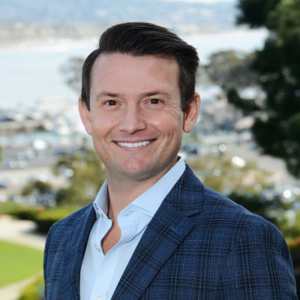
by RYAN THOMASON, CFA, Portfolio Manager
The stock market set new records in the third quarter, and for many investors the headline numbers looked reassuring. The S&P 500 gained 2.3% for the quarter and was up nearly 13% through September. A closer look shows a market that is being carried by a small group of very large companies, most of them tied to technology and artificial intelligence.
That matters because most portfolios hold the S&P 500 in some form, and the index today is more concentrated than at any point in modern records. When a few companies account for most of the gains, they can also account for most of the losses if expectations shift.
A Few Names, Most of the Return
Technology now makes up roughly 40% of the S&P 500, a slightly larger weight than Real Estate, Materials, Utilities, Energy, Consumer Staples, Industrials, and Consumer Discretionary combined. The seven largest technology-linked companies, often referred to as the “Mag 7,” account for about a third of the index on their own. Their share peaked near 35% in early June. The ten largest holdings make up 39.5% of the S&P 500, the highest level in data going back to 1980.

After lagging in the first half of the year, the Mag 7 outperformed the S&P 500 by roughly 9 percentage points in the third quarter. Technology as a whole returned 7.2%, second only to energy, which rose 17.2% on war-driven oil prices. Because energy makes up less than 4% of the index, its gains did little to move the overall market.
The concentration levels we are seeing are backed by real profits. S&P 500 earnings grew about 50% from a year earlier in the second quarter, with technology revenue up nearly 36% and semiconductor revenue up 77%. Nvidia earned $193 billion over the past year, while the companies in the Russell 2000, a small-cap index, collectively lost $14 billion. Much of this growth is fueled by AI spending. Alphabet, Amazon, Meta, Microsoft, and Oracle are expected to raise capital spending from $412 billion in 2025 to $789 billion in 2026, and to nearly $1.2 trillion a year by 2029.
Fewer than half of the companies in the S&P 500 are participating in this rally. At the end of September, only 40.6% of S&P 500 stocks traded above their 200-day moving average, a common gauge of a stock’s longer-term trend. That figure was near 73% in August. In early October, about 78% of technology stocks were above their 200-day averages, compared with only 10% of utilities.
Third quarter earnings are still expected to be strong, though growth is projected to slow to 27.2% from a year earlier, according to estimates compiled by Citadel Securities. Technology and energy companies are once again expected to be the biggest contributors. Micron and Nvidia alone account for 36% of expected index earnings growth, and the ten largest contributors account for about two-thirds. Without those ten, expected growth falls to about 11%.

When a few companies drive most of the return, an index fund behaves less like a diversified basket and more like a concentrated bet on AI. That has worked well, but it also means the market’s path depends heavily on a short list of companies meeting very high expectations, at a time when the 10-year Treasury yield has climbed to a peak of 5.31%, its highest level since 2002.
Differentiated Sources of Return
When a handful of companies carry the stock market, it is worthwhile to explore differentiated sources of return that are less exposed to the ups and downs of the overall market. One area that offers these characteristics is market neutral investing, specifically the BlackRock Global Equity Market Neutral Fund (BDMIX).
BDMIX buys stocks its managers expect to outperform and shorts a similar amount of stocks they expect to lag, generating return from stock selection instead of market direction. The team uses data and machine learning to rank companies from a universe of about 7,000 stocks across 23 developed markets, building a portfolio that targets a long-term return of cash plus 6% to 8%.
Over the five years ended June 30, 2026, BDMIX had a beta of 0.05 to the S&P 500, meaning a 10% market move has historically translated into about half a percent for the fund. Its correlation was 0.13 to the S&P 500 and -0.01 to the Bloomberg U.S. Aggregate Bond Index. That makes it a diversifier for both the stock and bond portions of a portfolio. Because its returns have not depended on the direction of either market, it can help improve a portfolio’s overall risk-adjusted return. The fund uses significant leverage, so its biggest risk is a broad hedge fund deleveraging, when many managers rush to close similar positions at once. In the last such episode, in 2015 and 2016, the fund lost about 7% before gaining 13% the following year.
What This Means for Your Portfolio
The third quarter was a reminder that an index can look healthy while most of its members struggle. Fewer than half of S&P 500 stocks ended the quarter in a long-term uptrend, and a handful of technology and AI companies supplied nearly all the gains. Those companies have earned their position with exceptional profit growth, and we expect them to remain important to portfolios.
Still, concentration cuts both ways. With interest rates at their highest levels in more than two decades and valuations elevated, the market leaves little room for disappointment from the companies at the top. Our approach is to stay invested while making sure portfolios have return sources that do not rely on the same few names. Adding a market neutral strategy like BDMIX is one step in that direction.
Give today, grant for generations
by MATT McMANUS, M.A., CFP®, Partner
How a donor-advised fund pairs an immediate tax deduction with a lasting family legacy
Most charitable decisions get made in December, in a rush, with a tax deadline looming. A donor-advised fund (DAF) changes that. It lets you take the tax deduction now, when it helps you most, and then decide where the money goes over months, years, or even generations. Think of it as a charitable savings account with your family’s name on it.
How It Works
You contribute cash, stock, or other assets to a DAF account held at a public charity, such as a community foundation or the charitable arm of a major financial firm. You receive a tax deduction in the year you contribute. The money is invested and grows tax-free, and whenever you’re ready, you recommend grants to the charities you care about. That’s it.
The Immediate Benefit: Your Deduction, This Year
- Deduct now, decide later. Your deduction is locked in the year you fund the account, even if the grants go out over many years. That’s especially valuable in a high-income year, such as the sale of a business or property, a large bonus, or a Roth conversion.
- Give appreciated stock, not cash. With markets near record highs, many investors hold stock with large built-in gains. Donating those shares directly to a DAF generally avoids capital gains tax entirely and still earns a deduction for the full market value. It’s often the single most tax-efficient way to give.
- “Bunch” several years of giving into one. Starting in 2026, charitable deductions only count above 0.5% of your adjusted gross income, and top-bracket taxpayers’ deductions are capped at a 35% benefit. Combining several years of gifts into one DAF contribution means you clear that floor once instead of every year, and are far more likely to exceed the standard deduction.

A few fine points: the new $1,000/$2,000 charitable deduction for people who don’t itemize does not apply to gifts to a DAF, and Qualified Charitable Distributions from an IRA (available at age 70½) must go directly to a charity rather than to a DAF. For many retirees, the best plan uses both tools side by side.
The Long-Term Benefit: A Legacy of Giving
The tax savings are what get most people started. The legacy is what keeps them going.
Bring the Family to the Table
Of everything a donor-advised fund can do, this may be the most meaningful. You can name your spouse, children, or grandchildren as advisors on the account, giving them a real voice in where the money goes. For many families, the fund becomes a shared project that brings generations together around something bigger than any one person.
A few ways we’ve seen families make it work:
- Hold an annual giving meeting. Pick a natural gathering, such as Thanksgiving weekend or a summer reunion, and set aside an hour to review last year’s grants and decide on this year’s. The holidays already bring everyone together; this gives the time a shared purpose.
- Give everyone a role that fits their age. Young children can choose a cause, such as an animal shelter or food bank, and help decide a small grant. Teenagers can research a charity and present it to the family. Adult children can serve as co-advisors and take the lead on part of the budget.
- Write a short family giving statement. A few sentences about what your family cares about, and why, helps guide decisions today and gives future generations a compass after you’re gone.
- Pair grants with time. Visiting the organizations you support, or volunteering there together, turns a check into an experience your family will remember.
- Plan the handoff. Naming successor advisors and leaving a letter of wishes ensures the fund continues the way you intended. Involving heirs early also means they’re prepared, not surprised, when the responsibility passes to them.
Along the way, these conversations quietly teach financial responsibility, generosity, and decision-making. Many parents tell us the giving meeting is the easiest family money conversation they have all year, and the one their children remember most.
More Ways a DAF Builds a Legacy
- Let it grow. Because the account is invested and grows tax-free, a fund started today can support more giving down the road than the original gift alone.
- Make it permanent. Most sponsors allow successor advisors, so the fund can continue after you’re gone, often carrying your family’s name.
- Use the most heavily taxed dollars. Naming a DAF as a beneficiary of a traditional IRA can be a smart estate move. Heirs pay income tax on inherited IRAs; a charity does not. Leaving the IRA to your DAF and other assets to your family can mean more for everyone and less for the IRS.
DAF or Private Foundation?
Families with significant charitable goals often ask whether they should start their own foundation instead. A foundation offers the most control, but at a meaningfully higher cost and administrative burden. For most families, a DAF delivers most of the benefits with far less work.


Important Disclosures: This article is provided by Optivest, Inc., a registered investment adviser, for informational purposes only and does not constitute tax or legal advice. Tax rules are complex and subject to change, and deduction limits depend on each taxpayer’s circumstances; please consult your tax professional before making charitable contributions. Examples are hypothetical and for illustration only.
Respectfully,
Matt, Leslie, Ryan & Ashlee